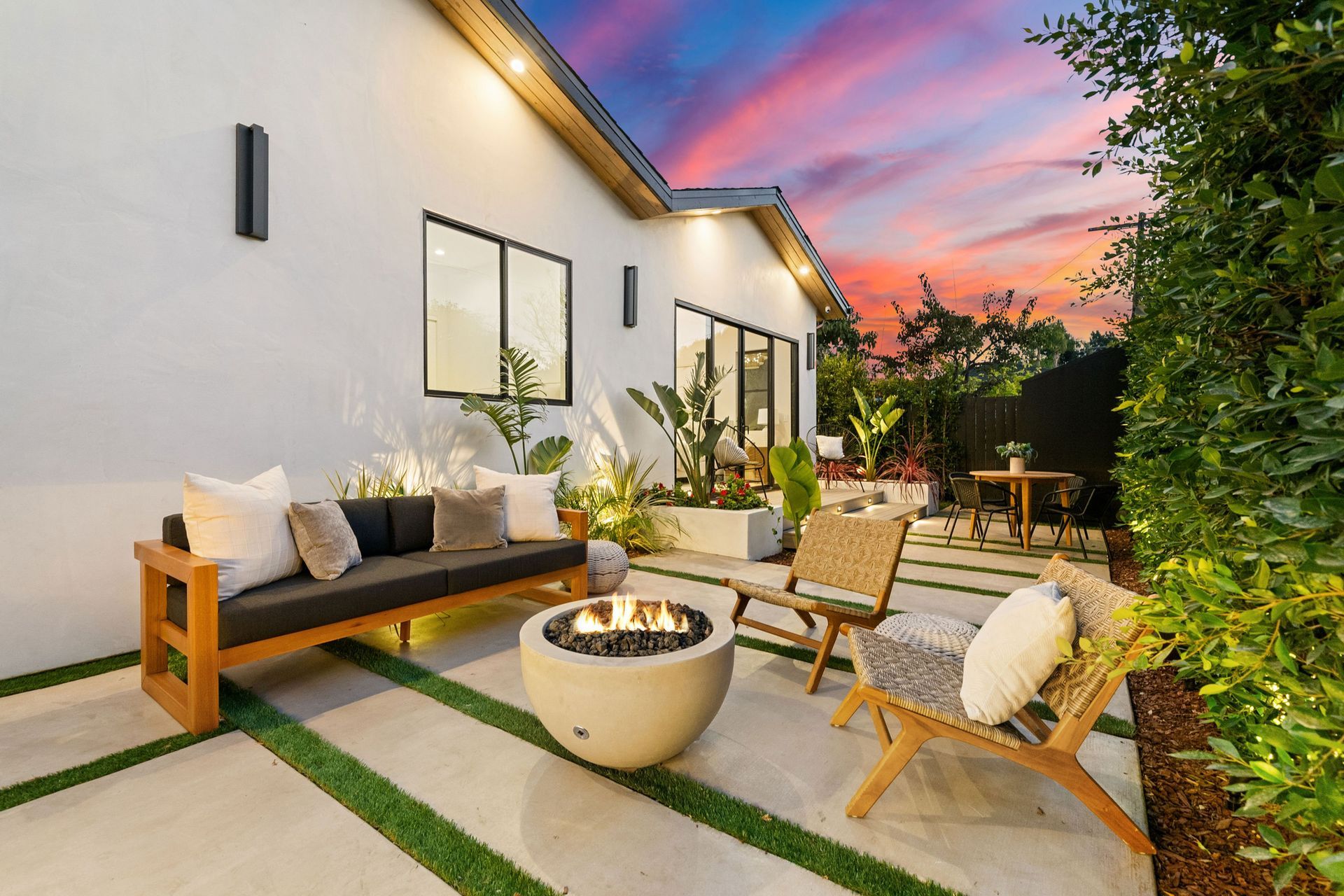
Designing Separate Spaces That Feel Connected, Intentional, and Effortless
If your outdoor space feels like one big, undefined area—too open, a little awkward, and unsure what it’s meant to be—there’s a reason for that.
In professional landscape design, we don’t treat outdoor spaces as “yards.” We design rooms without roofs: spaces shaped by intention, human use, and how people actually move, gather, and relax outdoors. The concept of outdoor rooms comes directly from architectural and landscape design theory. When outdoor rooms are designed well, a landscape stops being something you simply look at and becomes something you truly live in.
Let’s explore how professional landscape architects design outdoor rooms, and the real design theories behind them.
The Foundation: Rooms Without Walls
The idea of outdoor rooms was popularized in the mid-20th century by landscape architects Thomas Church and Garrett Eckbo, pioneers of modern residential landscape design.
In his 1955 book Gardens Are for People, Church introduced the idea that landscapes should function like interiors organized around human use, comfort, and movement. Eckbo expanded on this by emphasizing social function and flexibility, designing landscapes that responded to how people actually live, rather than how spaces traditionally “look.”
Key takeaway
An outdoor room doesn’t need four walls. It needs
definition, purpose, and human scale.
Design With Intention
The principle “form follows function,” coined by architect Louis Sullivan, taught in virtually every architecture and landscape design program, remains a foundational concept in the field.
Before deciding what a space looks like, designers ask one essential question:“What is this space meant to do?”
Applied to outdoor room landscape design, this means:
- Outdoor offices or gyms need enclosure, shade, and minimal visual distraction
- Lounging spaces benefit from softer boundaries and a sense of retreat
- Outdoor kitchens or bars work best with openness, visibility, and easy access
When form follows function, outdoor spaces feel intuitive instead of forced.
CreatE Separation Without Building Walls
The Prospect–Refuge Theory, introduced by geographer Jay Appleton, explains why people feel comfortable in certain environments. Humans prefer spaces where they feel:
- Protected (refuge)
- While still having outward views (prospect)
This theory is foundational in landscape architecture textbooks and plays a major role in how outdoor rooms are shaped.
In practice:
- A lounge surrounded by trees or tall planting = refuge
- A bar or dining space opening toward the rest of the garden = prospect
- An outdoor workspace backed by a hedge or wall = focus and comfort
You’re not just dividing space; you’re designing how people
feel
in it.
Vertical Elements as “Invisible Walls”
Rather than solid walls, landscape architects rely on vertical elements to define outdoor rooms while maintaining openness and flow.
Common strategies include:
- Layered planting
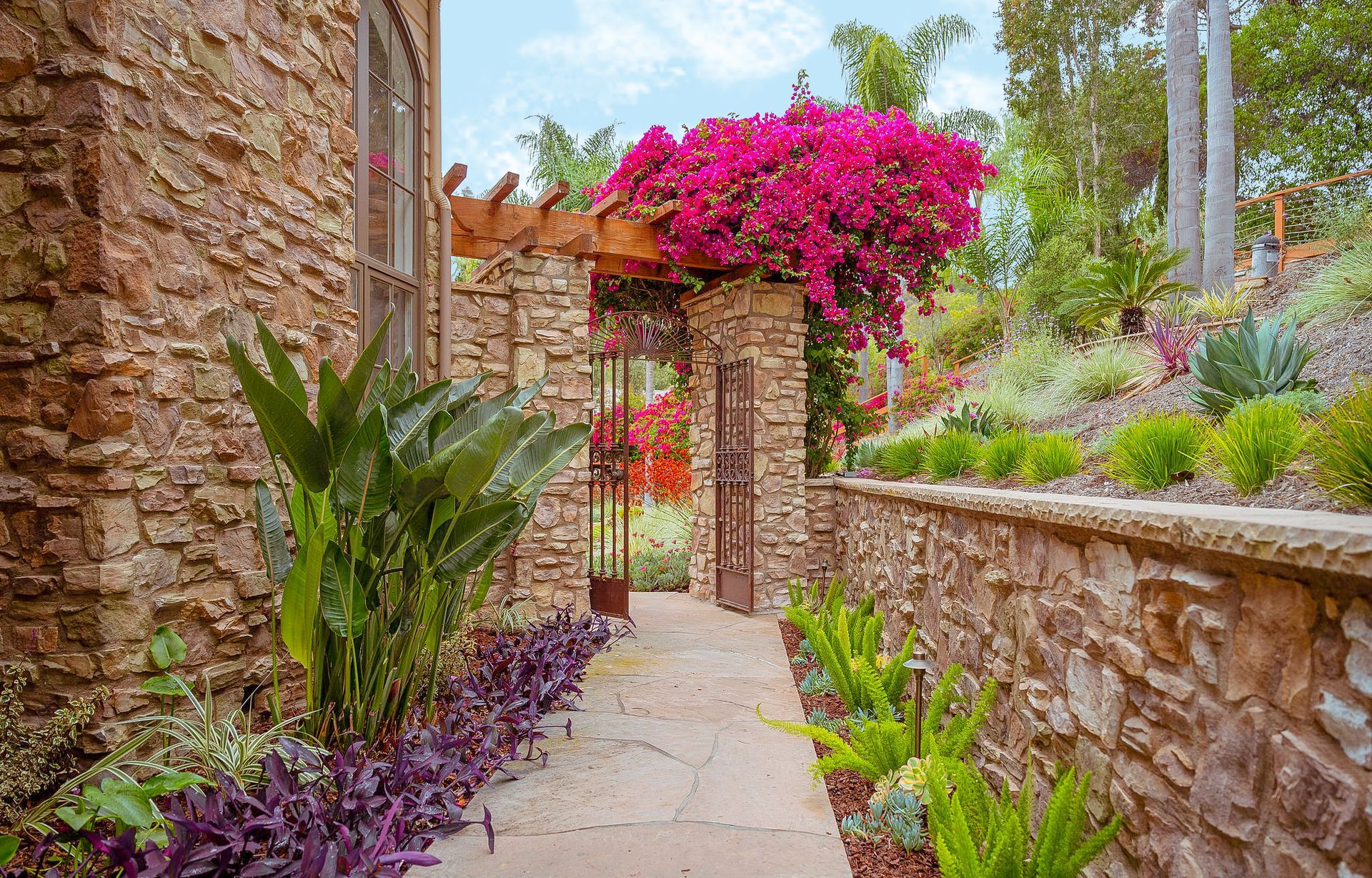
- Pergolas and trellises
- Slatted screens
- Low seat walls or raised planters
As Eckbo emphasized heavily in his residential work, these elements define space while preserving airflow, light, and visual connection. This approach creates what designers call
spatial legibility: people instinctively understand where one space begins and another ends.
Connecting the Rooms
In Architecture: Form, Space, and Order, architect Francis D.K. Ching outlines how spaces are experienced not in isolation, but as a sequence.
In landscape design, this translates to:
- Clear circulation paths
- Logical transitions between outdoor rooms
- No awkward dead ends
Paths, changes in paving, or subtle shifts in elevation guide movement without needing signage or explanation. Good circulation is what allows separate outdoor rooms to feel like a single, cohesive design.
Unity Through Repetition
Rhythm & Cohesion in Design Theory
Multiple outdoor rooms only work when they share a visual language. Designers create unity through:
- Repeated materials
- Consistent plant palettes
- Aligned sightlines
- Repeated architectural details
This concept, often referred to as rhythm and repetition, is a core principle taught across design disciplines. It’s what allows a productive space, a lounge, and an entertainment area to feel different yet undeniably connected.
What This Looks Like in Real Life
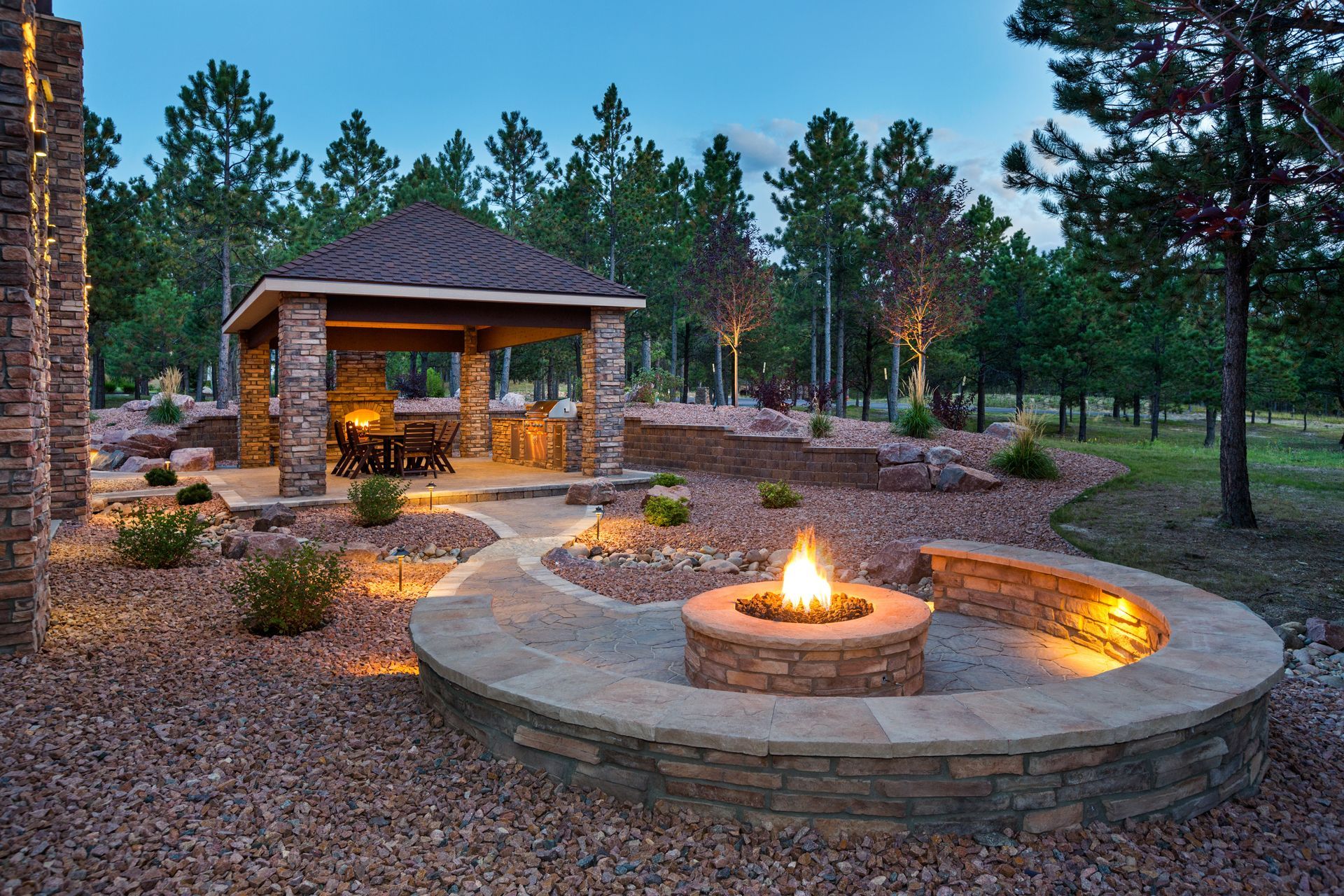
Imagine this spatial sequence:
- A shaded outdoor office tucked behind tall planting for focus
- A garden path transitions you into a lounge surrounded by trees
- That lounge opens visually toward an outdoor kitchen and bar
Each space:
- Has a distinct purpose
- Feels appropriately enclosed
- Remains connected through circulation and material continuity
That’s not decoration. That’s outdoor rooms landscape design theory in action.
Why Outdoor Rooms Matter
Thoughtfully designed outdoor rooms:
- Make compact spaces feel larger
- Increase the daily use of your landscape
- Support multiple activities without conflict
- Add long-term functional and property value
They also make maintenance more intentional; each space is planted and cared for based on how it’s used, not just how it looks.
Designed With Theory, Maintained With Intention
At Drab to Fab, we design landscapes the way architects design homes: grounded in theory, tailored to real life, and built to last. Our trained horticulturalists maintain each outdoor room so it continues to function (and feel) the way it was designed to.
If you’re exploring outdoor rooms landscape design or looking for landscaping design in San Diego rooted in real design principles—not trends—we’re here to help turn theory into a landscape you can truly live in.
Because great outdoor spaces aren’t just beautiful.They’re thoughtfully structured.
Additional Reading
The concept of outdoor rooms landscape design isn’t a trend. It’s rooted in decades of architectural and landscape architectural research. The ideas explored in this article are informed by the following foundational texts and thinkers, which are still taught in design programs today.
Design Theory References
- Church, Thomas D., Gardens Are for People,
McGraw-Hill, 1955.
A foundational text that introduced the idea of landscapes as functional, human-centered spaces, often referred to as “rooms without walls.” - Eckbo, Garrett, Landscape for Living,
Duell, Sloan & Pearce, 1950.
Eckbo emphasized social use, flexibility, and spatial definition in residential landscapes, shaping modern outdoor room design. - Sullivan, Louis H., The Tall Office Building Artistically Considered
Lippincott’s Magazine, 1896.
Origin of the principle “form follows function,” a cornerstone of architectural and landscape design thinking. - Appleton, Jay, The Experience of Landscape, Wiley, 1975.
Introduced Prospect–Refuge Theory, explaining why people feel comforted by spaces that balance enclosure and outward views. - Ching, Francis D.K., Architecture: Form, Space, and Order, Wiley, multiple editions.
A core textbook used in architecture and landscape architecture programs to explain spatial sequence, circulation, and cohesion.
These principles continue to shape how designers approach outdoor rooms landscape design, helping transform outdoor spaces into intentional environments that support productivity, relaxation, and connection.